More Information About Thermal Laminating Film
How to Use Thermal Laminating Film?
Lamination is a post-printing processing technology that combines pre-coated plastic film (such as BOPP or PET) with printed paper through heating and pressure. The specific process of a lamination process can be divided into three main stages: pre-lamination preparation, lamination process, and parameter control.
I. Pre-lamination Preparation
1. Equipment Preparation: Clean the rubber rollers and heating rollers, ensuring they are free of impurities; adjust the gap between the paper feed rollers according to the thickness of the printed material, and adjust the side gauges.
2. Material Preparation: thread the thermal lamination film through the heating roller, ensuring the adhesive side of the film faces the printed material, and adjust the guide rollers to ensure consistent tension on both sides of the film and a wrinkle-free surface.
3. Print Preparation: Check that the surface of the printed material is clean (free of powder and dust) and that the ink layer is dry to avoid bubbling or delamination after lamination.
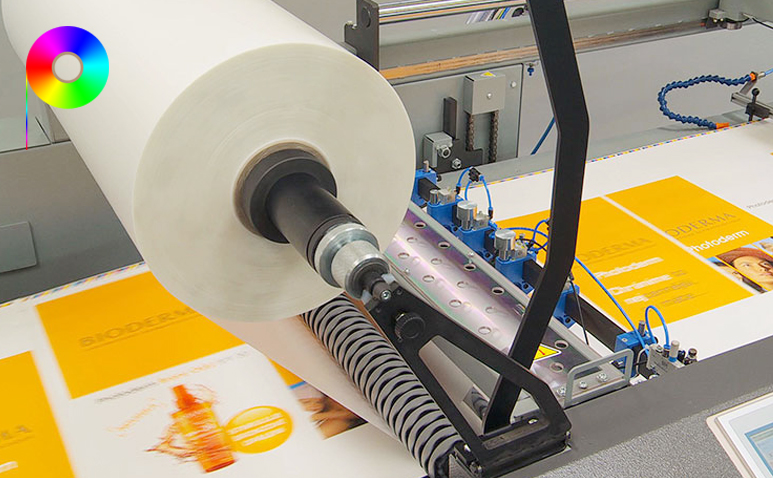
II. Lamination Process (Core Flow)
1. Paper Feeding: The printed material is automatically or manually fed into the laminator via a paper feed table for precise positioning (side guide, front guide).
2. Hot Pressing: The printed material and thermal lamination film enter the hot pressing lamination area simultaneously. Through the pressure and heat applied by rubber rollers and heated rollers, the adhesive on the thermal laminating film melts and fully penetrates and diffuses to the surface of the printed material, achieving a strong bond.
3. Rewinding/Collecting: After lamination, the product is rewound via guide rollers or directly collected. Some products need to be left to stand (e.g., for 24 hours) to stabilize the bonding effect before slitting or collecting.
III. Process Parameter Control (Key to Lamination Quality)
1. Lamination Temperature: Typically controlled between 90℃ and 115℃. Temperature determines the melting state and penetration ability of hot melt adhesive. Too low a temperature will result in weak adhesion, while too high a temperature will cause film shrinkage, bubbling, or curling.
2. Laminating pressure: Typically controlled between 8MPa and 22MPa. The pressure needs to be adjusted according to the tightness of the paper. Too little pressure will result in weak adhesion, while too much pressure will cause wrinkling or damage to the rubber rollers.
3. Laminating speed: Typically controlled between 5 and 30 m/min. The speed needs to be matched with the temperature and pressure. Too high a speed will result in insufficient heating time for the adhesive, affecting the bonding effect; too low a speed will affect production efficiency.
Note: In actual production, parameters need to be flexibly adjusted according to equipment performance, film type, and printed material to achieve the best laminating effect.
FAQ on Thermal Laminating Film
Q: How many rolls can fit into a container?
A: A 20' container holds approximately 350–700 rolls, depending mainly on the width, with a weight capacity of about 13~16 tons. A 40' container holds approximately 700–1,200 rolls, depending mainly on the width, with a weight capacity of about 25~28 tons.
Q: What kind of samples can you provide for testing?
A: inventory sample(freely provided) is 300~400mm*50/100m, thickness and parameters as per your project; custom sample depends on inventory situation(may be charged);
Q: How do you convert between roll price, price per kilogram, and price per square meter?
A: Products of different thicknesses have different yields; there is no direct conversion factor, so conversion can only be performed once the thickness and other details are confirmed. Below are the conversion factors for weight and square footage for various standard thicknesses.
| conversion factor(estimated) | example(calculation is kg price/factor) | |
| 18micron gloss 3" core 3000m length | 57.94 square meter/kg | USD 2.85/kg = USD 0.04914/SQM |
| 18micron matte 3" core 3000m length | 60.03 square meter/kg | USD 3.14/kg = USD 0.05231/SQM |
| 20micron glossy 3" core 3000m length | 52.25 square meters/kg | USD 2.84/kg = USD 0.05435/SQM |
| 25micron glossy 3" core 3000m length | 42.11 square meters/kg | USD 2.71/kg = USD 0.06346/SQM |
| 25micron matte 3" core 3000m length | 42.83 square meters/kg | USD 2.82/kg = USD 0.06584/SQM |
About Thermal Laminating Film at PNP Film
To Be the Most Professional and Reliable Partner of Thermal Laminating Film
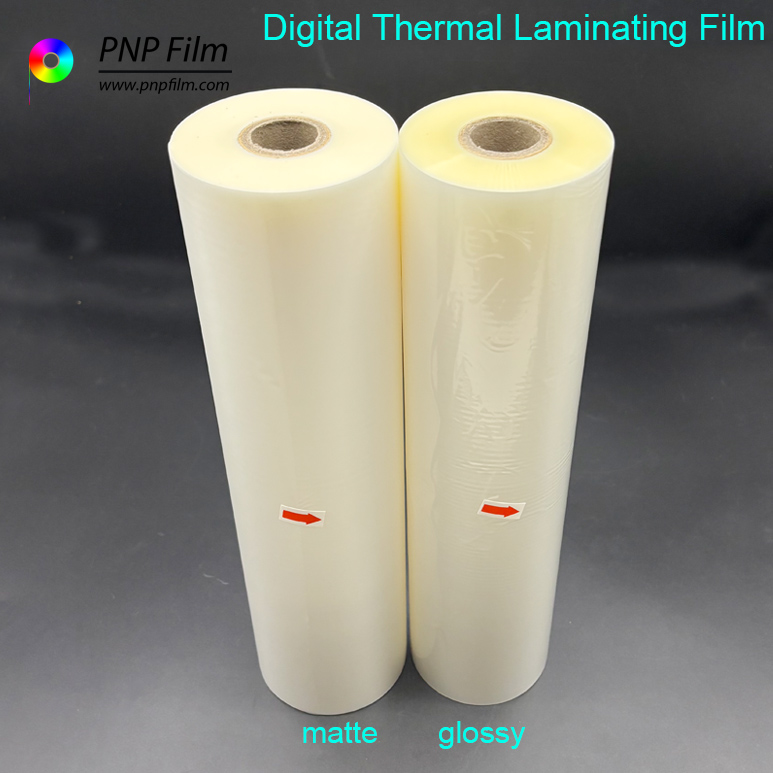
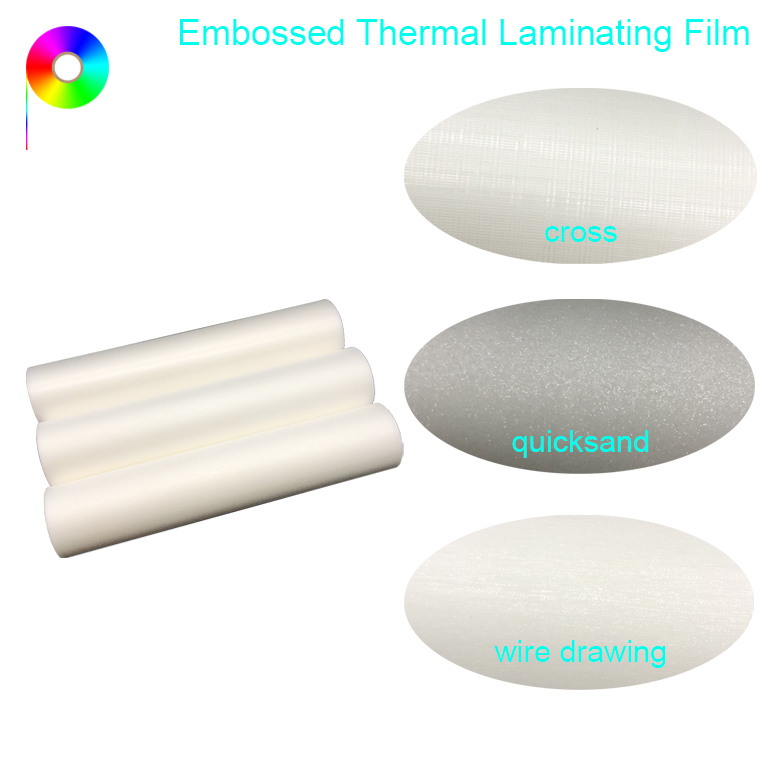
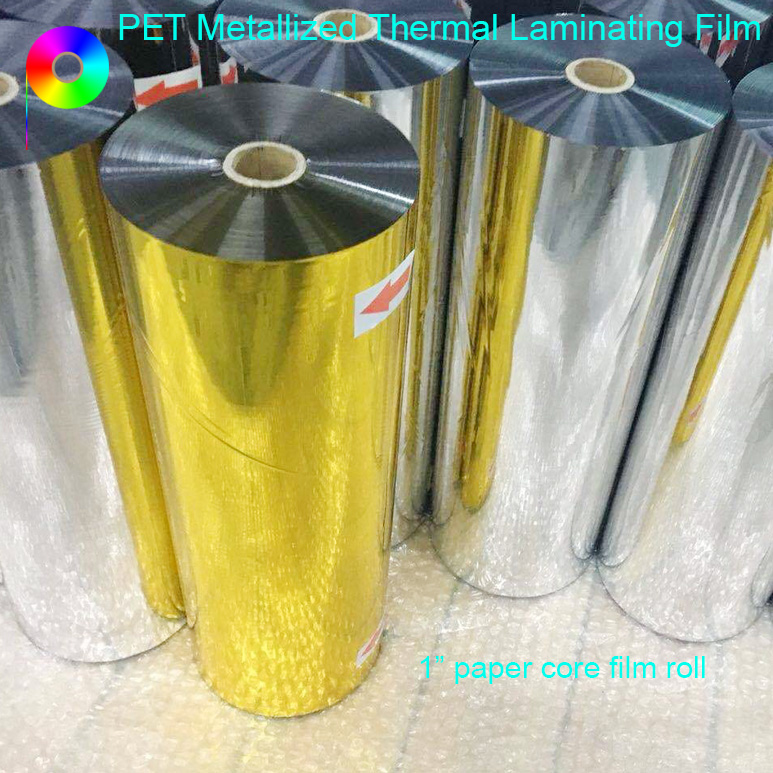
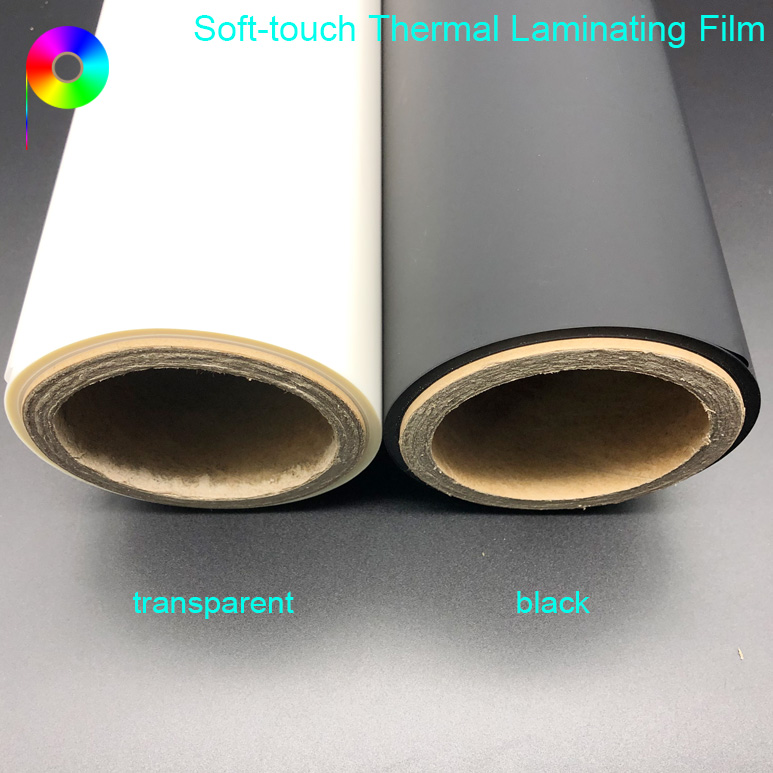
Driven by clients’ demand, powerred from R&D department, supported by the production department, PNP Film has developed many types of thermal laminating film, which makes clients able to find the more suitable product for their specific requirements from PNP Film. Below are some popular types of thermal laminating film, and clients are welcome to send us any specific demand for product innovation.
| regular BOPP/PET |
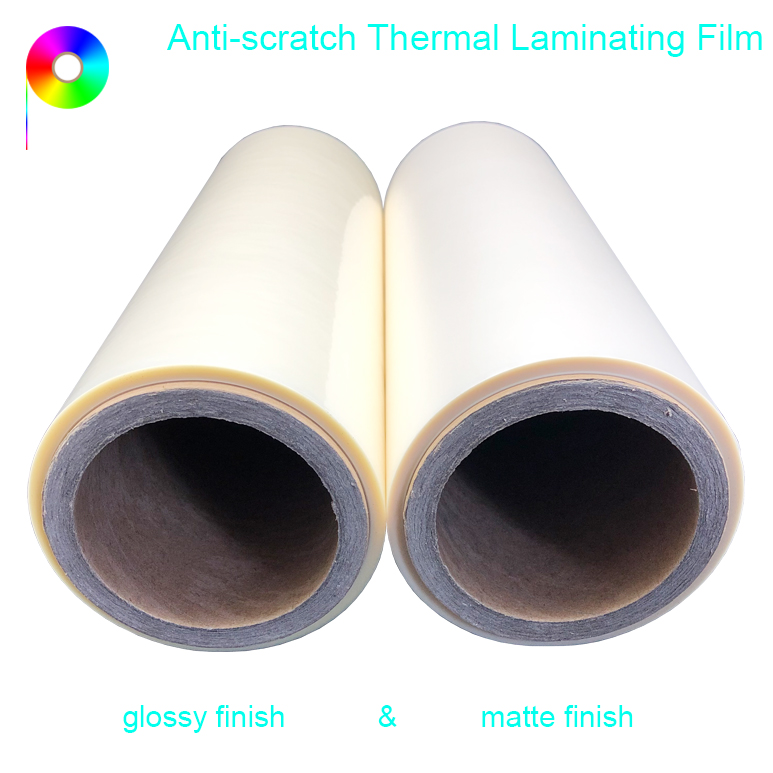
anti-scratch |
digital |
embossed |
metalized |
soft touch |
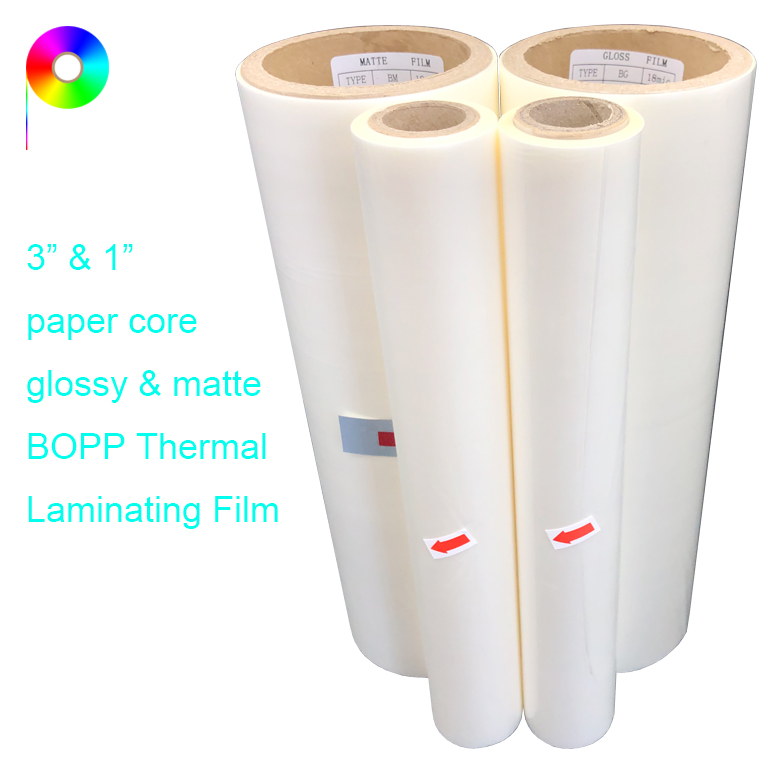
| 15~25micron; glossy and matte; 1" and 3" paper core; |
scratch resistant; one thickness; glossy and matte; |
super sticky; for digital prints; glossy and matte; |
textured surface; embossed pattern; glitter/cross/brushed; |
metallized effect; silver/gold/colors; PET material mainly; |
velvet effect; one thickness; transparent/black; |
 |
 |
 |
 |
 |
 |
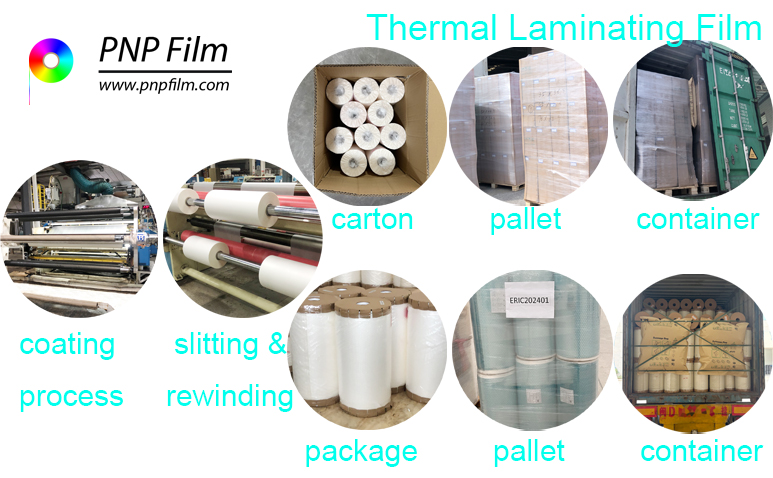
Production and packing details for Thermal Laminating Film in PNP Film
coating process, slitting and rewinding process, individual packaging, label with product information, rolls load to carton/pallet/container;